When Love Ends: How Heian Women Found Peace
Hi!
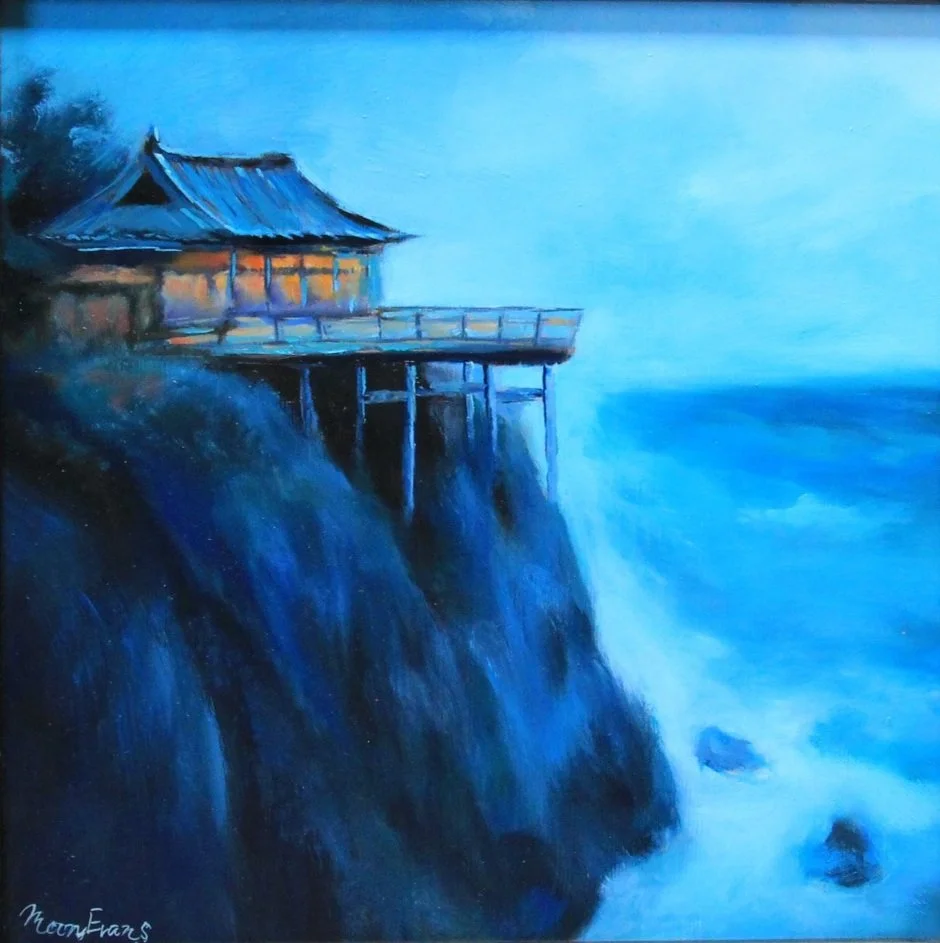
Today I’d like to share the story behind my painting, Cliff Temple.
It shows a quiet temple standing alone on a high cliff, looking out over the sea and sky.
The deep blue above and soft waves below create a calm, peaceful feeling. Inside the temple, warm lights glow, like a small safe space in the middle of a huge world.
I wanted this painting to feel like a moment of deep peace after a long time of sadness.
This idea was inspired by the lives of women in Japan’s Heian period, over 1,000 years ago.
Many of these women lived in the royal court, where life looked elegant on the outside—but behind the fancy clothes and poetry, there was a lot of loneliness and heartache.
Women didn’t have much control over who they married or how their relationships turned out.
If a man stopped visiting, the woman had no way to get him back. It could be very painful, especially when love was real.
So what did they do with all that sadness?
Some of them turned to religion. They became Buddhist nuns—not because they were forced to, but because they wanted to leave behind the hurt and find peace.
This was a big, serious decision. First, they would cut their hair, which was a huge deal at the time.
Long, black hair was a symbol of beauty, so cutting it meant letting go of their past life.
After that, they would move to a temple or a quiet place in the countryside.
They spent their days praying, meditating, and living simply.
To me, that’s powerful.
These women were choosing peace.
Even though their hearts were broken, they didn’t give up—they just found a different way to heal.
They didn’t chase after the people who left them.
They turned inward, toward silence and stillness. That’s the feeling I tried to paint in Cliff Temple.
It’s not just a painting of a temple. It’s a painting of a moment—when someone decides to stop chasing love that hurts and instead listens to their own heart.